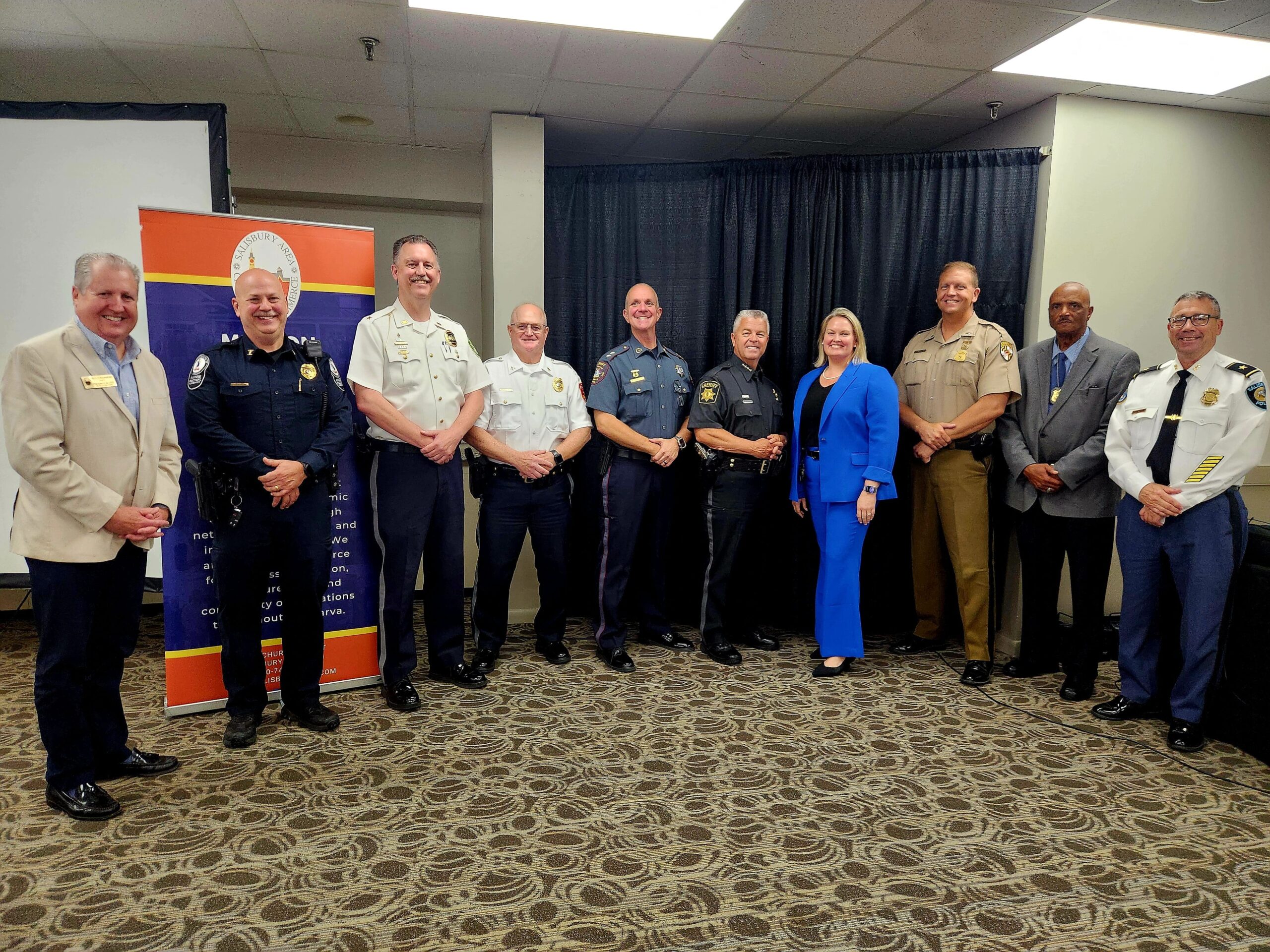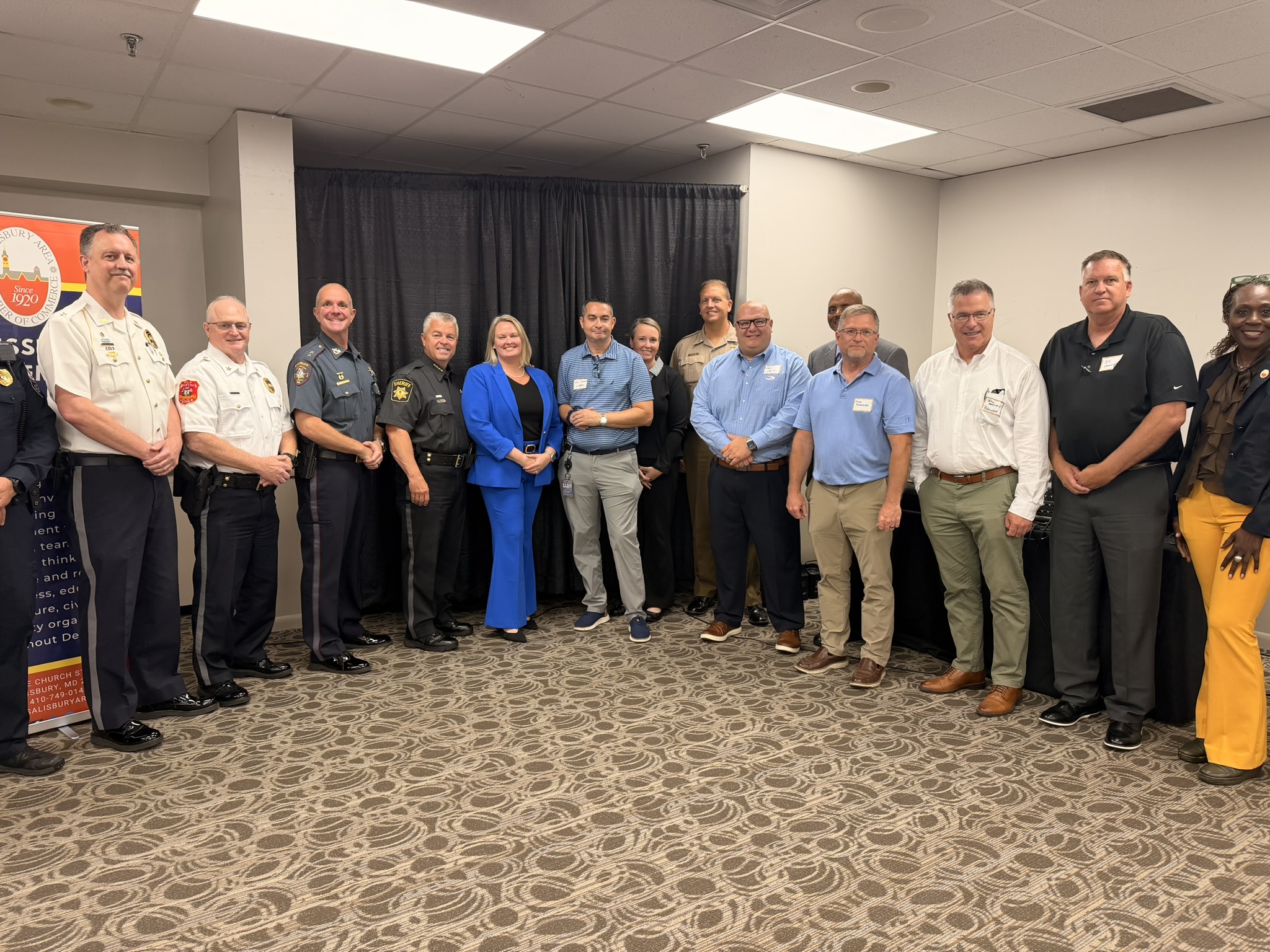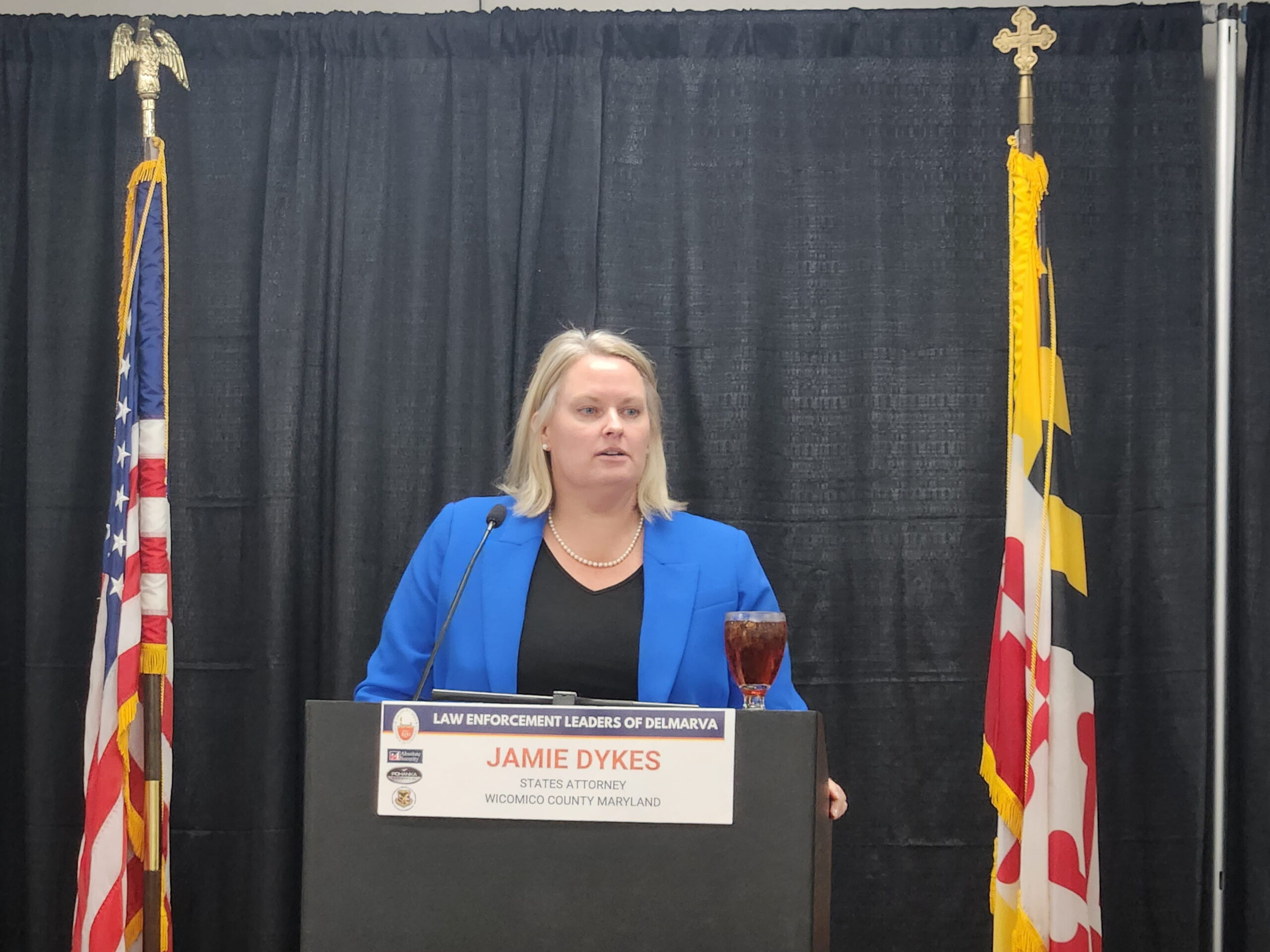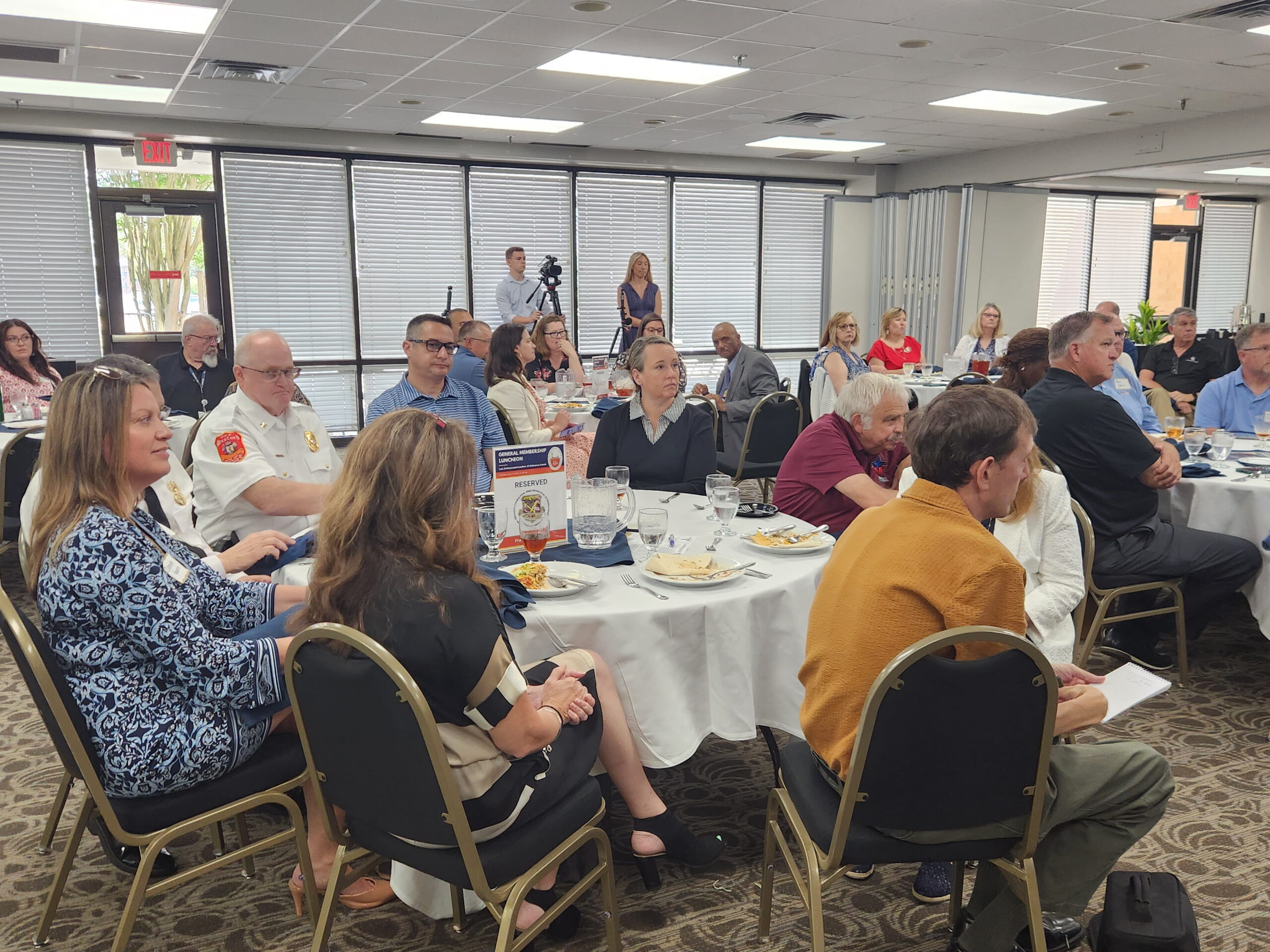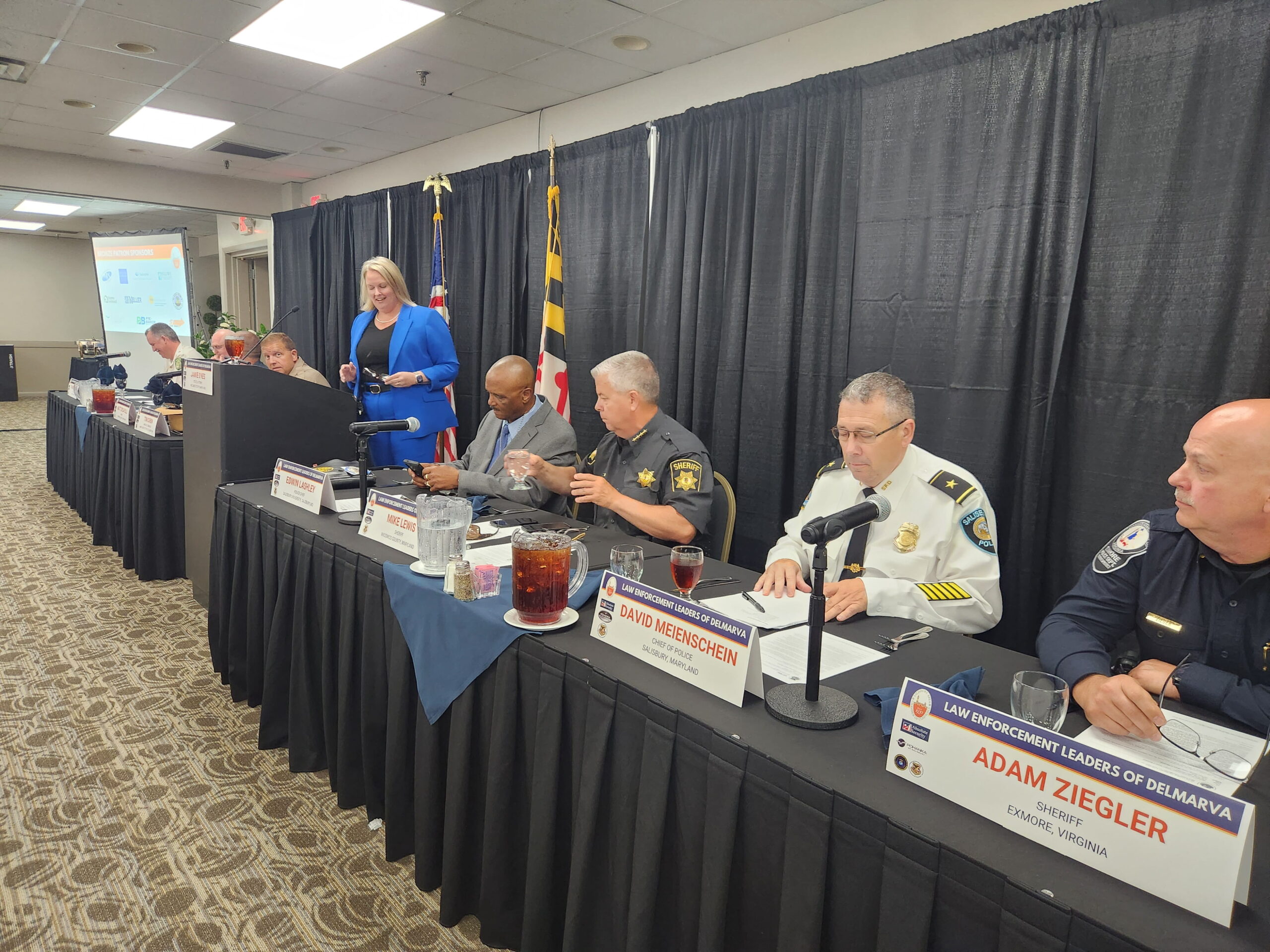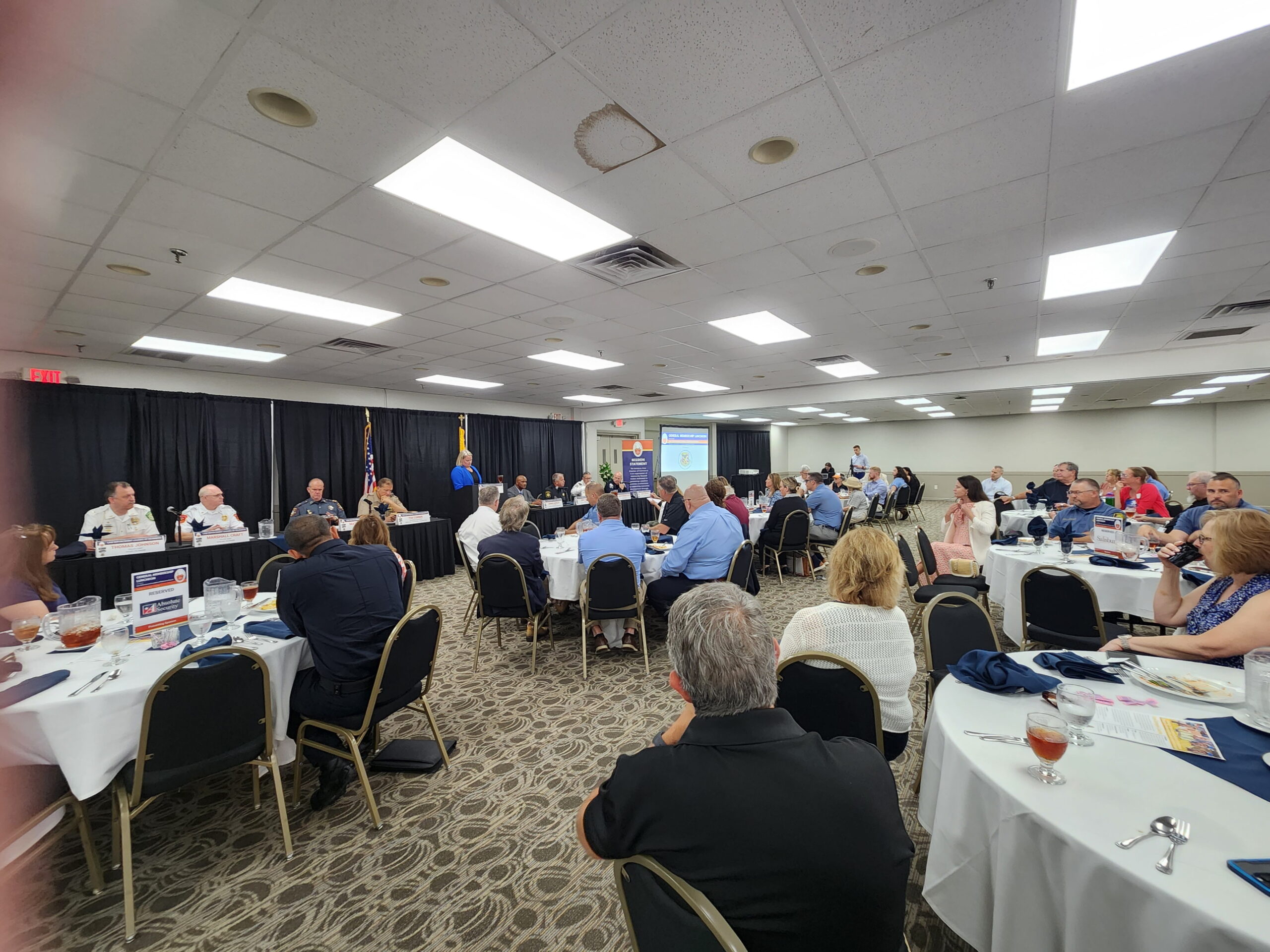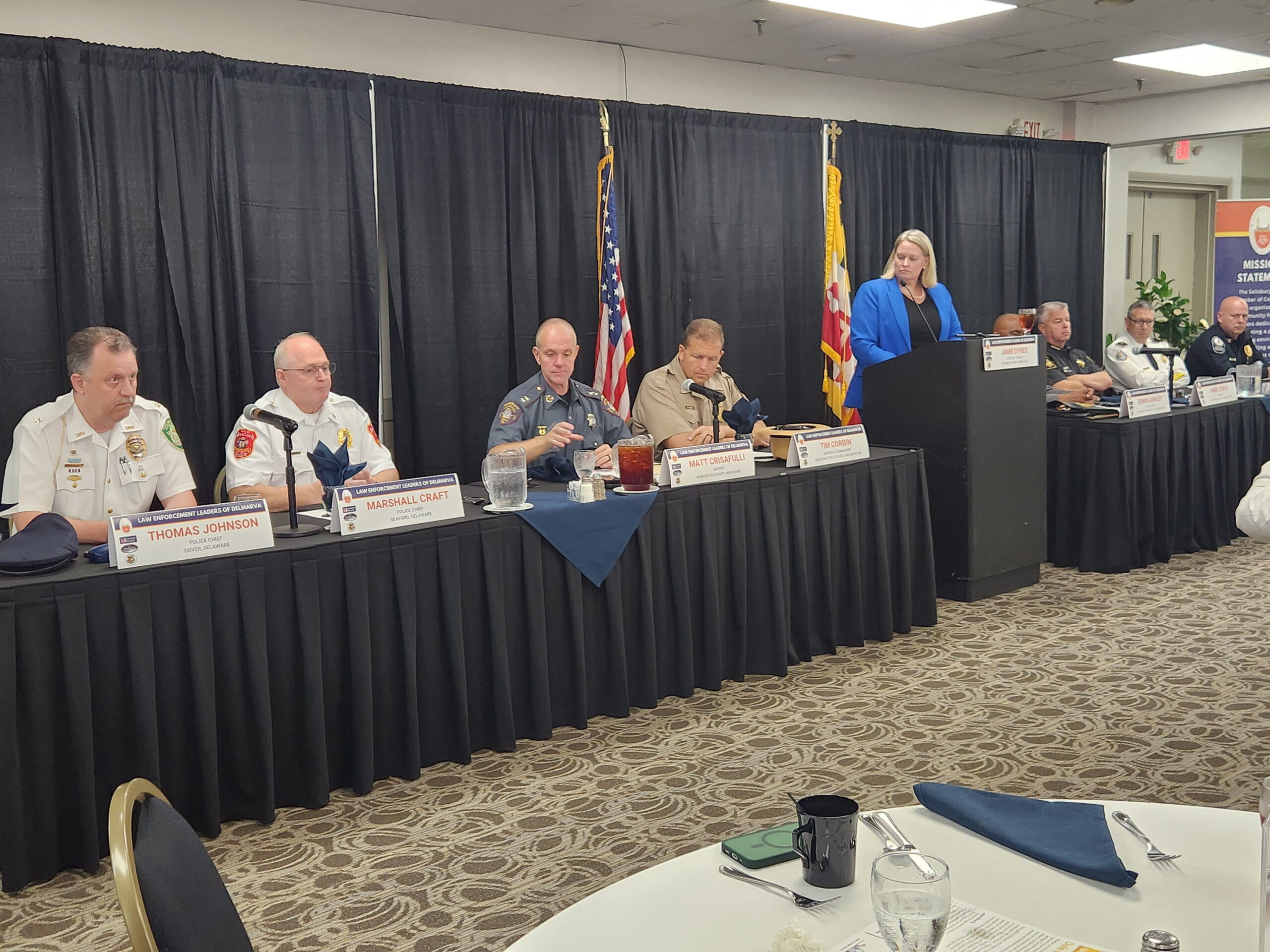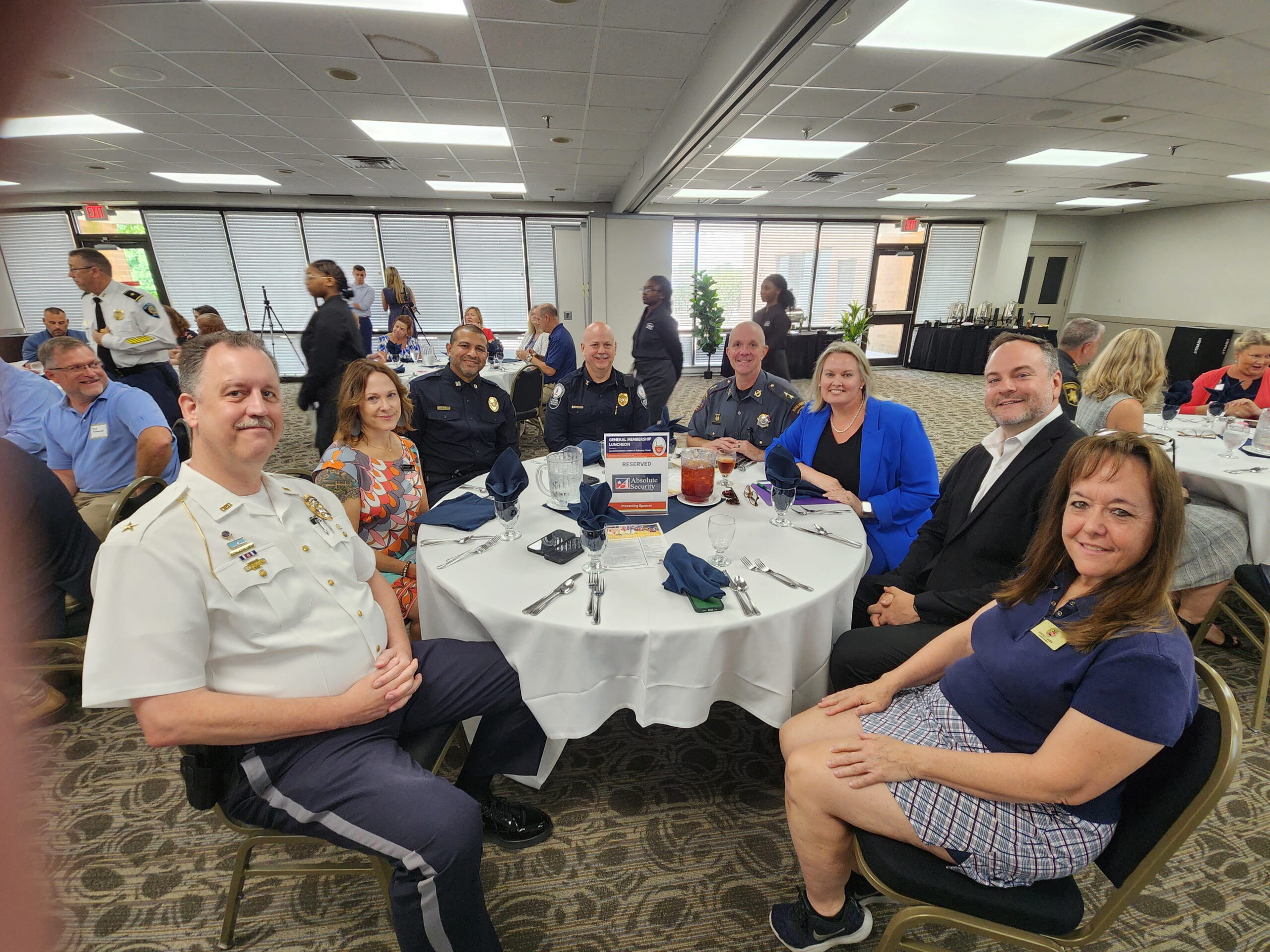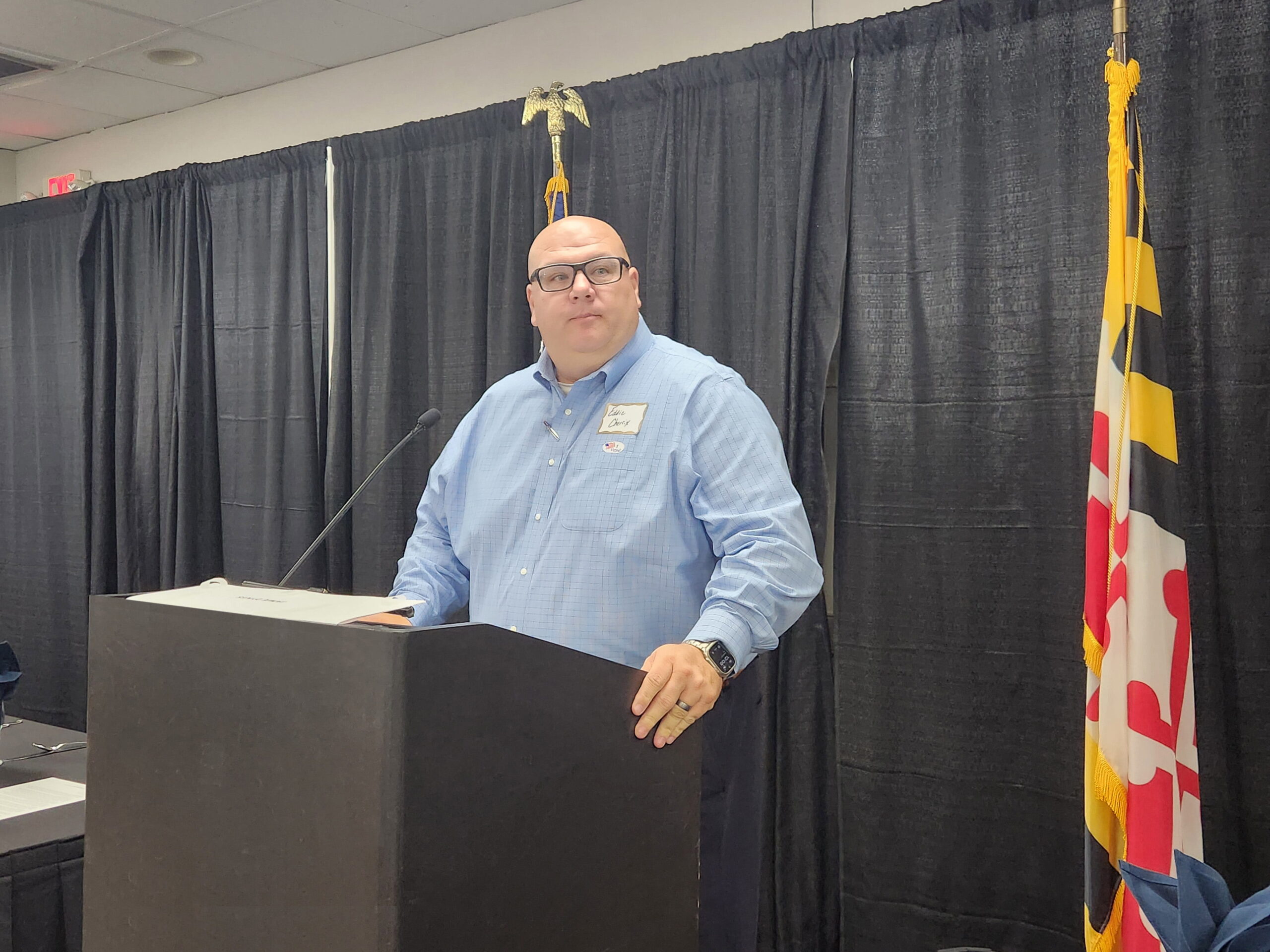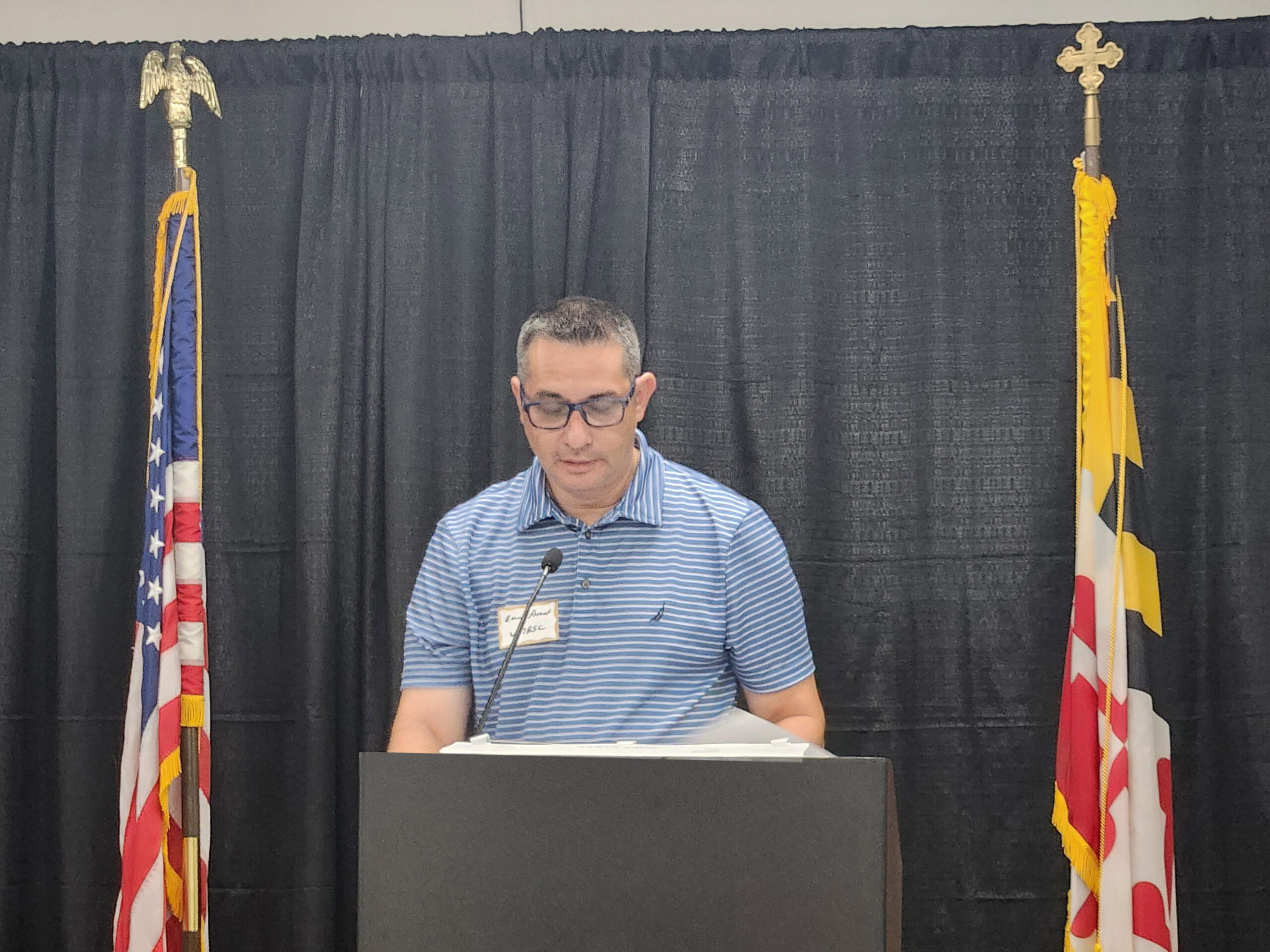

The Salisbury Area Chamber of Commerce (SACC) hosted its annual Law Enforcement Leaders of Delmarva Forum and Luncheon on June 11 at the Wicomico Civic Center, bringing together law enforcement leaders, business professionals, elected officials, and community stakeholders for an informative and engaging discussion on the challenges and opportunities facing modern policing.
The Chamber extends its appreciation to the event’s Presenting Sponsors—Absolute Security Group, Inc., Pohanka Automotive Group Commercial Division, and USTASC—as well as Sponsor Salisbury University for their support of this important regional forum.
The panel featured distinguished law enforcement leaders representing eight Delmarva jurisdictions:
- Sheriff Matt Crisafulli, Worcester County Sheriff’s Office (Maryland)
- Captain Tim Corbin, Commander, Maryland State Police Salisbury Barrack
- Chief Marshall D. Craft, Jr., Seaford Police Department (Delaware)
- Chief Thomas Johnson, Jr., Dover Police Department (Delaware)
- Chief Edwin Lashley, Salisbury University Police Department
- Sheriff Mike Lewis, Wicomico County Sheriff’s Office (Maryland)
- Chief David Meienschein, Salisbury Police Department (Maryland)
- Chief Adam Ziegler, Exmore Police Department (Virginia)
The forum was moderated by The Honorable Jamie Dykes, Wicomico County State’s Attorney, who guided a thoughtful discussion on staffing shortages, emerging technologies, legislative impacts, and the evolving role of law enforcement agencies.
Dykes opened the discussion by asking panelists about one of the profession’s most pressing challenges—recruitment and retention.
Chief Thomas Johnson, Jr. of the Dover Police Department noted that while his department is currently staffed within budgeted levels, actual operational needs exceed current staffing.
“We are probably twenty-five positions short of what our consultants tell us is our true authorized strength,” Johnson said.
Salisbury Police Chief David Meienschein echoed those concerns, emphasizing the impact of retirements and competitive hiring markets.
“The retirement of experienced officers and the challenge of remaining competitive make it difficult to consistently maintain full staffing levels,” Meienschein explained.
Wicomico County Sheriff Mike Lewis offered a broader perspective on the changing law enforcement profession.
“Hiring standards have changed. We are hiring officers we would never have hired in the past. We lose recruits during training, and salaries have become more important than the mission of serving one’s community,” Lewis said.
The conversation then shifted to the growing role of technology in policing.
Worcester County Sheriff Matt Crisafulli highlighted the operational benefits technology provides.
“Technology allows deputies to complete reports more efficiently and spend more time out in the community,” Crisafulli said.
Seaford Police Chief Marshall D. Craft, Jr. agreed but noted the challenges that accompany increased reliance on technology.
“There is more data available than ever before, but our ability to analyze and utilize that information is often limited by staffing shortages. Technology requires us to work smarter,” Craft said.
Captain Tim Corbin, Commander of the Maryland State Police Salisbury Barrack, discussed the value of body-worn cameras and other technological advancements.
“Body-worn cameras protect our troopers and improve transparency,” Corbin said. He also expressed appreciation to the Maryland General Assembly for providing the funding necessary to implement the program statewide.
Chief Adam Ziegler of Exmore, Virginia, shared how smaller departments balance technology investments with limited resources.
“We don’t have all the latest technologies, but systems like Watchdog cameras have helped us solve serious crimes, including shootings. At the same time, when those systems fail, they can create a different set of challenges,” Ziegler noted.
When asked how legislative and policy decisions affect law enforcement operations, Salisbury University Police Chief Edwin Lashley emphasized the importance of aligning policy goals with operational realities.
“What legislators sometimes don’t understand is that policies must be synchronized with reality,” Lashley said.
Both Sheriffs Lewis and Crisafulli discussed their experiences testifying before the Maryland General Assembly regarding legislation affecting public safety.
“We spend considerable time in Annapolis explaining how proposed policies impact our departments and our deputies,” they noted. “Legislators often encourage us to testify and share our perspectives, but too often those perspectives do not influence the final outcome.”
To conclude the forum, Dykes asked each panelist what single change they would make to improve law enforcement today.
Chief Johnson responded immediately.
“Officers are not worried about danger. They want to be trusted and treated professionally. We are all tired of the political rhetoric surrounding policing,” Johnson said.
He concluded the discussion with a message that resonated throughout the room:
“Trust doesn’t require a budget.”
The Salisbury Area Chamber of Commerce thanks all participating law enforcement leaders, sponsors, and attendees for contributing to another successful and insightful forum focused on issues affecting communities across Delmarva.