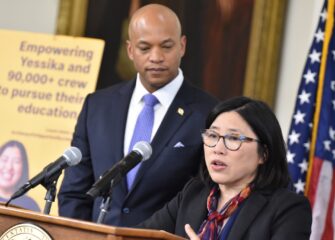

Dr. Christina “Tina” Dougherty, who is the University of Maryland Eastern Shore School of Veterinary Medicine’s (UMES SVM) new Associate Dean for Clinical Programs and Outreach, always had a soft spot for animals of all shapes and sizes.
“I was the kid who would bring injured animals home when I found them,” she said. “Little birds that fell out of their nests or squirrels that were clipped by a car.”
What clinched her desire to become a veterinarian came from a crisis she herself faced as a young pet owner.
“When I was 14, I was given a cockatiel for my birthday. About six months later, he got sick, and I was unable to find anybody to treat him,” she said. “My older brother drove me from vet to vet to see who would help me with this bird. Finally, after three or four stops, we found a veterinarian who said he would take a look. It frustrated me to know that so few animal doctors were willing to treat this little guy that meant so much to me.”
Determined to make a difference in the lives of animals, Dougherty majored in biology in college and attended the University of Pennsylvania School of Veterinary Medicine before entering clinical practice, where she worked with dogs, cats, and exotic animals. She said that, while she treated a wide variety of exotic species over the course of her career, she found that she developed a greater appreciation of cats as pets.
“I used to hate cats, because I thought they were aloof and not always so people-friendly,” she said. “I had mainly been exposed to dogs growing up. But I finally ended up with one sweet cat that I rescued from my practice, and he became my surrogate dog. Since then, and aside from the menagerie of animals my children had when they were younger, I have stuck with cats as my favorite domestic species.”
Dougherty said that throughout her journey in veterinary medicine, the one thing she has learned is that all animals have a personality.
“Everyone has heard that adage about ‘all dogs go to heaven’, right? Well, I truly believe that every animal has a personality, and, therefore, they all have souls,” she said. “They have their likes and dislikes. They all like being handled in certain ways. They are all individual creatures, and they all have a little touch of heaven in them.”
When discussing what led to her decision to come to UMES to help launch the upcoming vet school, which is pending accreditation from the American Veterinary Medical Association, she cited two factors – the need to help spur diversity in the field of veterinary medicine and the need for more practitioners in general across the country.
“There has been a shortage of veterinarians in certain geographic areas, as well as certain specialties, for a while. More industries want to have veterinarians on staff, and it is not just the pharmaceutical companies. All the nutraceutical, cosmetic, and food companies need vets on staff, as well as colleges and universities doing medical research.
With data showing that black veterinarians make up only 3% of the population, Dougherty understands the necessity of broadening the field in order to meet patient needs and the role UMES can play in it.
“I felt that UMES’ mission was a very powerful one, and I wanted to make a difference in that area,” she said. “Even if we just look at the small animal sector of dogs and cats, statistics show that pet owners are more inclined to seek out veterinarians of the same ethnic background for their pets’ care. If we don’t have enough representation of diverse populations, how are those populations of pet owners going to seek the care their pets need? We must have more than just a ‘men vs. women’ representation. We need ethnic diversity as well.”
In her new role, Dougherty will lead the SVM’s Office of Clinical Programs and Outreach, which will help develop ties to local practices, diagnostic laboratories, and food industries in the area. These sites will serve the role of the school’s clinical partners and will host students in their facilities as part of their education, thus providing them with much-needed hands-on experience before graduation. These outreach initiatives will be beneficial to both UMES SVM students and the broader community.
“There are a lot of quality veterinary practices and farms around the vet school, as well as up and down the Mid-Atlantic coast, and we want to forge very powerful relationships with these locations,” she said. “It will be great for the communities in which our clinical partners are located to see that students from this program are quality students.”