SALISBURY, MD—Salisbury University remains among the 35 most sustainable colleges and universities in the U.S., according to The Princeton Review.
For the 17th consecutive year, The Princeton Review, in partnership with the U.S. Green Building Council (USGBC), has included SU in its Guide to Green Colleges, which highlights impressive environmental and sustainability programs at campuses throughout the U.S. and select institutions in Canada.
“Salisbury University is proud to again be recognized by The Princeton Review as one of the ‘greenest’ campuses in the nation,” said President Carolyn Ringer Lepre. “For more than 35 years, SU has been a leader in sustainability among Maryland institutions. And we’re not done yet. Early next year, Blackwell Hall, our former campus library, will reopen not only as a newly imagined state-of-the-art student service center, but as one of the first net-zero buildings in the University System of Maryland, eliminating all net greenhouse gas emissions from the facility. This significant achievement will mark the next step in our decades-long commitment to environmental preservation and protection.”
The Princeton Review guide is based on a survey of hundreds of colleges nationwide. Questions explore institutional commitment to areas including LEED building certifications, environmental studies programs, alternative transportation, recycling and conservation programs, and more.
The 375 colleges in the guide were selected based on “green rating” scores from summer online profiles and annual guidebooks.
In 2008, SU’s Conway Hall (formerly the Teacher Education and Technology Center) became the first U.S. Green Building Council Leadership in Energy and Environmental Design (LEED)-certified new construction project on the Eastern Shore, earning Silver status. Since then, 10 other new or renovated campus buildings have earned LEED Gold or Silver certification, including Perdue Hall, Sea Gull Square, Sea Gull Stadium, the Patricia R. Guerrieri Academic Commons, and Pocomoke, Wicomico, Manokin, Nanticoke, Chester and Choptank residence halls.
SU also is home to the Eastern Shore’s first public electric vehicle charging stations. Other alternative transportation initiatives include a bicycle-friendly campus, complete with “Fixit” stations and bike storage buildings for residents, and a bike lane that leads from the University to downtown Salisbury.
Offering a major and minor, the Environmental Studies Department features award-winning faculty and staff. SU also has several environmentally related academic programs in the geo-, biological and physical sciences.
Other initiatives include one of the area’s oldest corporate recycling programs, a trayless dining hall, solar parking canopy producing enough electricity annually to power three campus residence halls, and building innovations such as the “green roof” atop the Patricia R. Guerrieri Academic Commons, which allows a blanket of plant life to serve as a storm water filtration system and help keep the facility cooler by reducing the roof’s heat island effect.
In addition, SU was the University System of Maryland’s first Bee Campus USA honoree, recognized for creating sustainable habitats and fostering ongoing dialogue to raise awareness of the role pollinators play in the greater community. In 2022, the University also was named a “High Flyer” Maryland Bird Campus for providing a healthy space for birds.
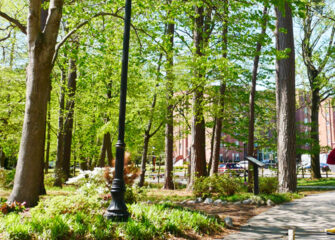
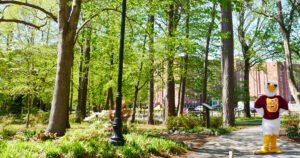
SU also is a nationally recognized Tree Campus, accredited as a Level III arboretum by the ArbNet Arboretum Accreditation Program and Morton Register of Arboreta.
To download the Guide to Green Colleges visit www.princetonreview.com/college-rankings/green-guide.
Learn more about SU and opportunities to Make Tomorrow Yours at www.salisbury.edu.